
Main Article
How to Wash a Football Jersey Step by Step
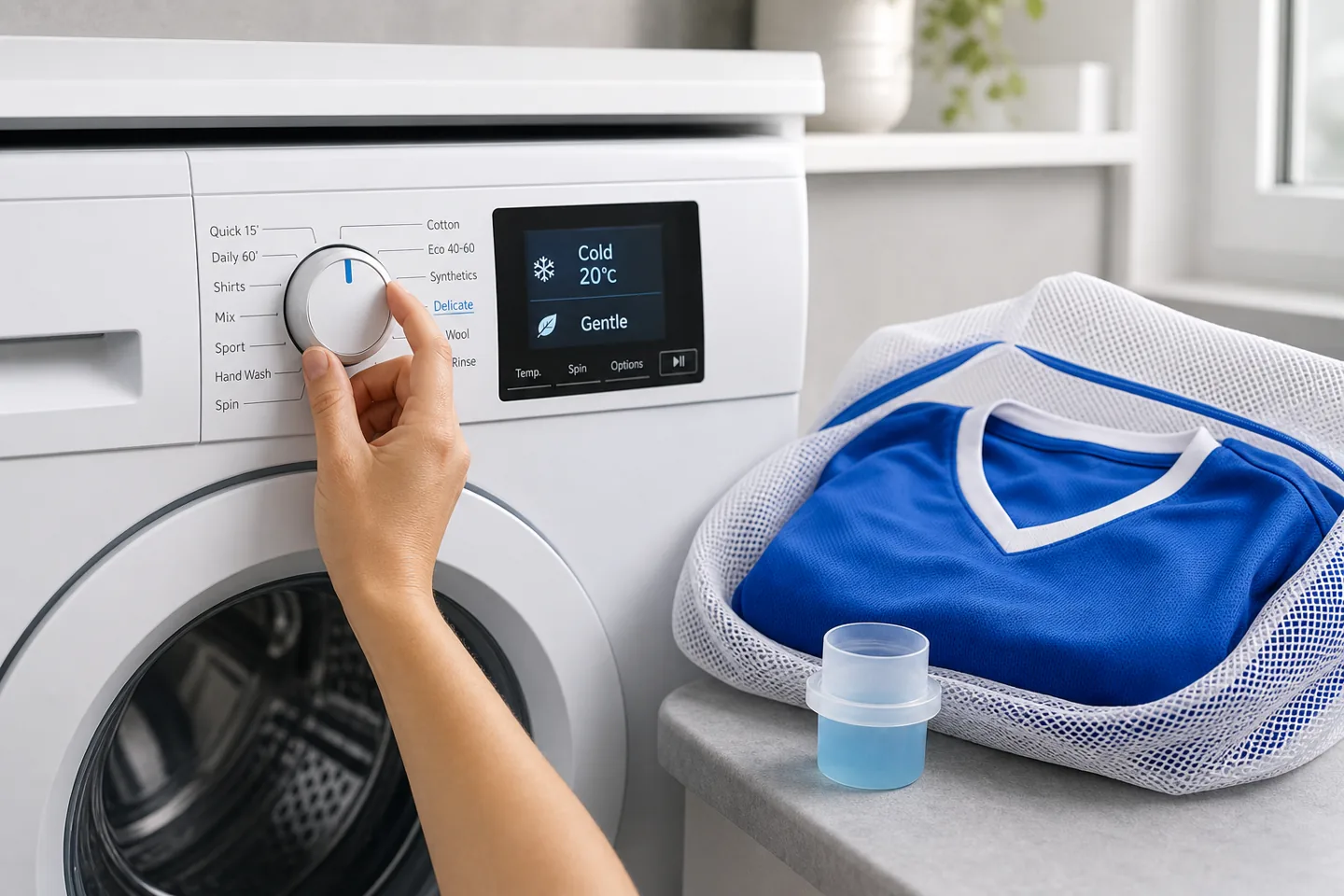
For most football jerseys, careful preparation matters as much as the wash itself. The routine below is a safe general starting point for synthetic sportswear, but it never overrides the instructions sewn into your shirt.
Before starting, inspect both sides of the shirt under good light. Photograph delicate names, numbers, badges, and existing damage if the jersey is valuable or part of a larger team order. Empty pockets, remove loose accessories that are designed to detach, and confirm that no chewing gum, tape, pins, or sharp objects remain. This short inspection prevents avoidable surprises and gives you a clear reference when checking the jersey after washing.
1. Read the Care Label
The care label should be your first source of truth. Football jerseys differ in fabric blend, print method, badge construction, seam finish, and trim. One shirt may allow a low-temperature tumble dry, while another may require line drying. A label may permit a cool iron on plain fabric but prohibit ironing any motif.
- recommended water temperature
- machine-wash or hand-wash instructions
- drying method and heat limit
- ironing restrictions
- bleach and dry-cleaning restrictions
If the label conflicts with this general guide, follow the garment label.
2. Turn the Jersey Inside Out
Turning the jersey inside out helps protect the most vulnerable exterior surfaces. Printed names, player numbers, sponsor graphics, badges, and patches otherwise rub directly against the machine drum and other clothing. Inside-out washing also gives water and detergent better access to the side that holds most sweat and body oil.
- Check that the entire shirt, including sleeves, is reversed.
- Fasten only closures that the care label or construction requires.
- Place a delicate jersey in a clean mesh garment bag for extra separation.
- Do not fold sticky or lifting graphics against each other.
3. Separate Colors and Delicate Items
Wash light football shirts away from dark garments that may release dye. A new strongly colored item can transfer color even in cool water. Keep jerseys away from towels, denim, open zippers, hooks, and hook-and-loop fasteners, all of which can abrade or catch lightweight knit fabric.
| Wash Together | Wash Separately |
|---|---|
| Similar-colored sportswear | Dark items that may bleed |
| Lightweight synthetic garments | Towels and jeans |
| Other delicate jerseys | Open zippers and rough fasteners |
4. Pre-Treat Visible Stains
Mud, grass, food, drink, and sweat marks are easier to address before they set. Remove loose material gently, then blot instead of rubbing aggressively. Apply a small amount of mild detergent or a compatible treatment according to its directions. Keep scrubbing and stiff brushes away from transfers, embroidery, and patch edges.
- Identify the stain and check the care label.
- Remove loose dirt without stretching the fabric.
- Blot from the edge toward the center.
- Apply only an approved treatment.
- Wash using the specified program.
- Inspect the area before drying.
Do not put a stained jersey into a hot dryer. Heat can make some residues harder to remove and may also damage the graphic you are trying to protect.
5. Use Cold Water
For many jerseys, cold water is the safest general choice. It limits heat exposure during the wash and helps reduce the risk of fading or stress on heat-applied details. Cold does not mean every shirt must use the same program; always select the exact temperature printed on the label when one is given.
| Water | When to Use It | General Risk |
|---|---|---|
| Cold | Best general option for many modern jerseys | Lower heat exposure |
| Warm | Only when the care label allows it | More heat than usually needed |
| Hot | Usually avoid for synthetic printed shirts | Higher risk to color and graphics |
6. Choose a Gentle Cycle
A gentle or low-agitation cycle reduces mechanical movement. That matters because a football shirt often combines thin fabric with printed or bonded details. Select a low or moderate spin when the label permits, leave enough room for garments to move, and avoid a heavy-duty program intended for towels or heavily soiled workwear.
7. Use Mild Detergent
Use a mild laundry detergent suitable for synthetic or performance clothing. Measure for the actual load and water conditions instead of adding extra detergent for reassurance. Too much product can rinse poorly, remain in synthetic fibers, and leave the shirt feeling less clean. Pour detergent into the machine dispenser rather than directly onto a printed area.
- mild liquid detergent
- sportswear-compatible detergent
- the recommended measured amount
- chlorine bleach
- harsh products on graphics
- excess detergent
- unapproved chemical cleaners
8. Skip Fabric Softener
Usually, you should not use fabric softener on a football jersey. Softener can coat synthetic fibers and leave residue that is unnecessary for technical sportswear. Unless the permanent label explicitly allows it, skip this product. Mild detergent and thorough rinsing provide a simpler routine with fewer variables.
If softener was added accidentally, do not try to correct it with stronger chemicals. Check the label and run only a permitted rinse or wash. Repeated unapproved treatments can create more risk than the original mistake.
9. Avoid Chlorine Bleach
Chlorine bleach may affect synthetic fibers, colors, printed numbers, heat transfers, sponsor graphics, badges, or patches. A white base fabric does not make every colored trim and applied detail bleach-safe. Use only a stain or whitening product that the garment label permits, and follow the product’s safety directions.
- Never mix bleach with other household cleaners.
- Do not spot-apply bleach beside a colored transfer.
- Do not assume an oxygen product is suitable without checking.
- Stop if the care label prohibits bleaching.
10. Remove the Jersey Promptly
Take the shirt out when the cycle ends. A wet jersey left compressed with other garments can wrinkle, hold odor, or pick up transferred dye. Hold the shirt by the body rather than pulling a sleeve or graphic, then gently reshape the shoulders, hem, collar, and side seams.
- Check whether the stain is still visible.
- Inspect names, numbers, and patch edges.
- Confirm the fabric is fully rinsed.
- Reshape without stretching.
- Prepare the shirt for air drying.
11. Air Dry the Jersey
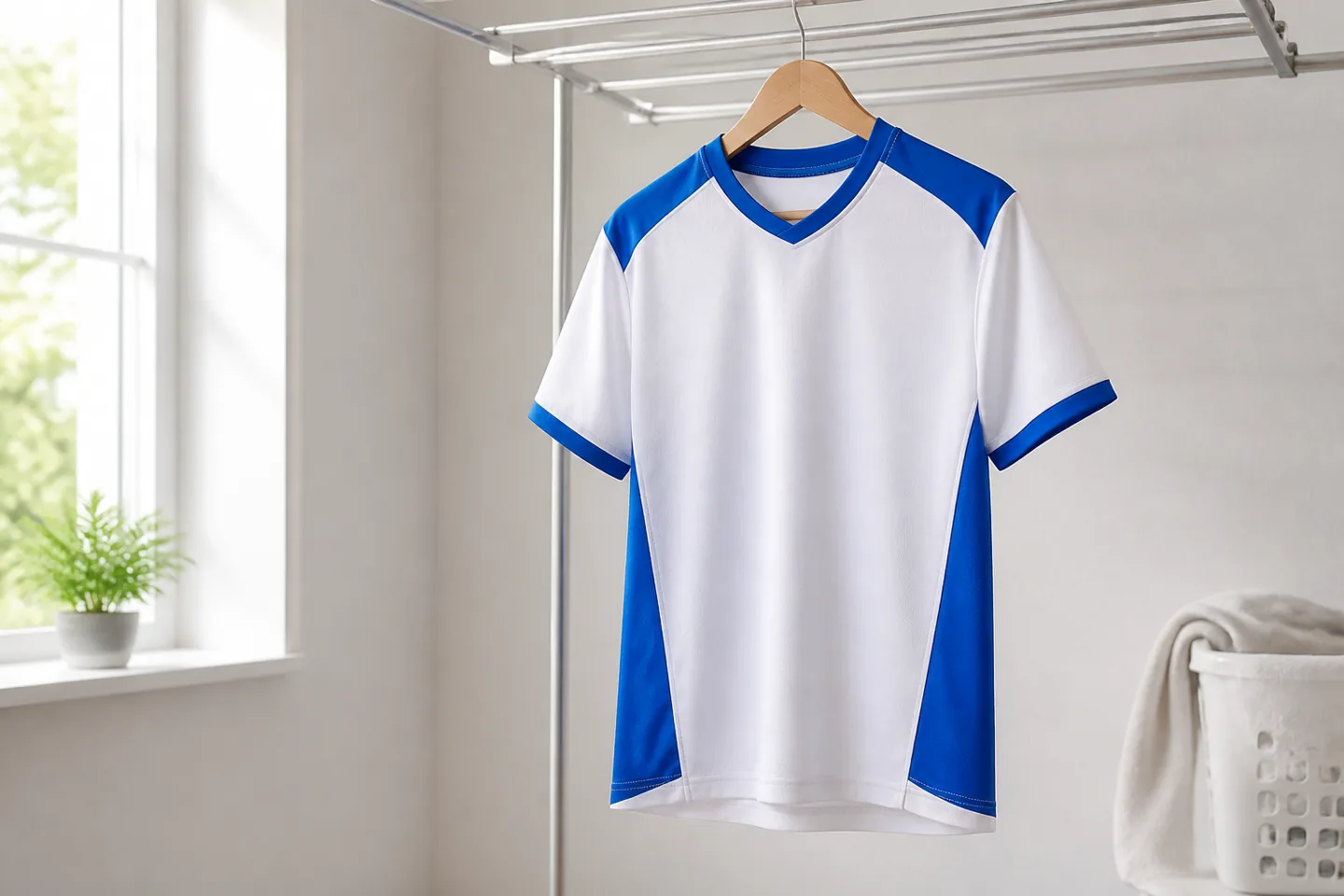
Air drying is the safest general choice for most football jerseys. It avoids the heat and repeated tumbling that can stress synthetic fabric and applied graphics. Use a clean drying rack or a suitable smooth hanger, support the shirt evenly, and keep it away from radiators, open flames, and intense direct sunlight.
| Method | General Guidance | Heat Exposure |
|---|---|---|
| Air dry | Safest general option | Minimal |
| Low tumble dry | Only if the label permits | Controlled but present |
| High heat | Avoid | High risk for graphics |
12. Keep Direct Heat Away From Graphics
Heat-applied names, numbers, sponsor logos, and transfer badges are especially sensitive to direct heat. Do not place a hot iron on them. If the care label permits ironing, use only the stated temperature and work around every motif. A clean cloth barrier is not permission to ignore an explicit “do not iron print” symbol.
- player names and jersey numbers
- sponsor logos and transfer badges
- competition patches
- printed motifs and decorative films
How to Hand Wash a Football Jersey
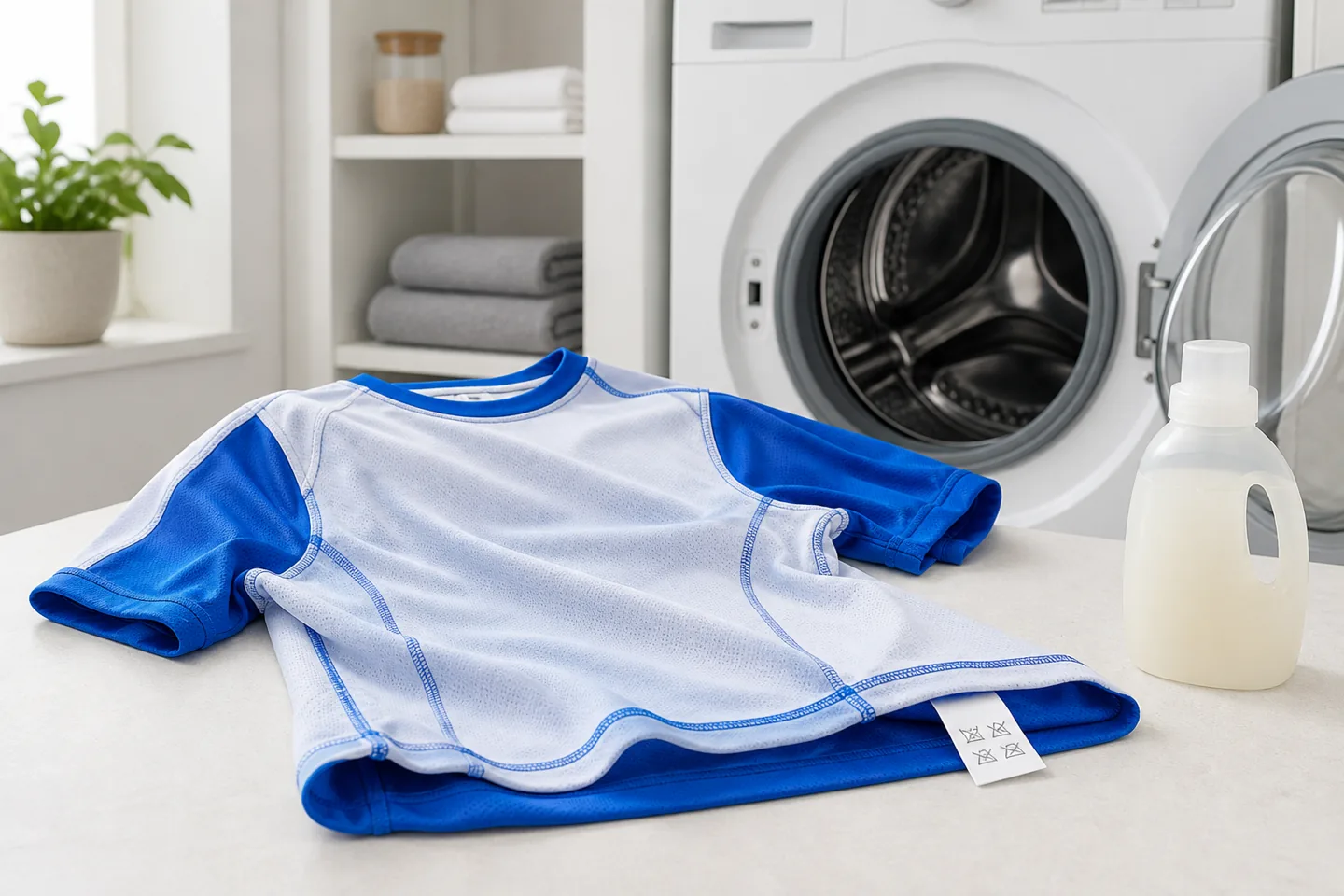
Hand washing can suit a delicate, older, or fragile jersey when its label permits the method. It gives you direct control over agitation, but rough handling can still stretch fabric or damage printing. Use a clean basin that contains no bleach residue, cosmetics, or cleaning chemicals.
- Fill the basin with cool water at the permitted temperature.
- Add a small measured amount of mild detergent.
- Turn the jersey inside out and submerge it gently.
- Move it slowly through the water without hard rubbing.
- Let permitted detergent contact soiled areas briefly.
- Rinse thoroughly with cool clean water.
- Press out water without twisting or wringing.
- Reshape and air dry on a clean support.
Do not pull the shirt by its collar, scrub a printed number against itself, or leave it soaking longer than the label or detergent instructions allow. If water alone makes a transfer lift or colors run, stop handling the garment and seek specialist advice.
How to Wash Jerseys With Names, Numbers, and Patches

Printed and heat-applied details often require more care than the base fabric. The practical goal is to reduce heat, friction, stretching, and chemical exposure. Examine graphics before washing. If a name or number is already cracked or lifting, ordinary washing can make the existing damage more visible.
| Detail | Main Risk | Care |
|---|---|---|
| Player name | Peeling or cracking | Wash inside out; avoid direct heat |
| Jersey number | Surface wear | Use gentle wash; air dry |
| Club badge | Heat or abrasion | Avoid aggressive scrubbing |
| Sleeve patch | Edge lifting | Use a mesh bag; avoid dryer heat |
| Sponsor graphic | Cracking or peeling | Never iron directly |
Do not attempt a home repair with a household iron unless you have reliable instructions for the specific transfer. Adhesive, carrier films, pressure, and temperature vary. An incorrect repair can permanently mark both the graphic and fabric.
How Often Should You Wash a Football Jersey?
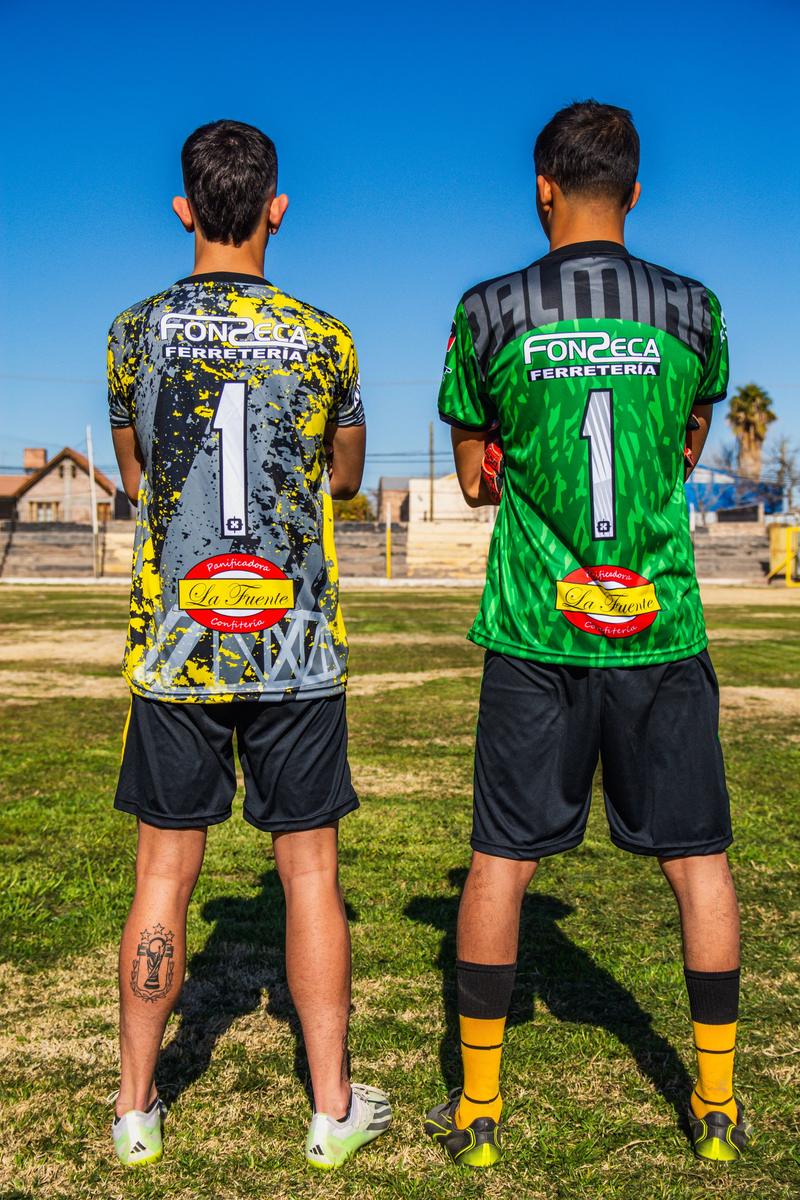
Wash frequency depends on use. A shirt worn while playing or during heavy exercise should generally be washed after use because sweat, oil, grass, and dirt can remain in synthetic fabric. Letting a damp jersey sit in a closed kit bag makes later cleaning more difficult.
- After playing football: wash after use.
- After heavy sweating: wash after use.
- After light casual wear: wash when needed.
- Collector jersey: minimize unnecessary washing and handling.
- Stored display jersey: keep clean, dry, and protected without frequent washing.
Do not use fragrance as the only test of cleanliness. Check the inside neckline, underarm areas, and lower back for moisture or residue. Between wears, allow a clean lightly worn jersey to air fully before storage.
How to Remove Stains From a Football Jersey
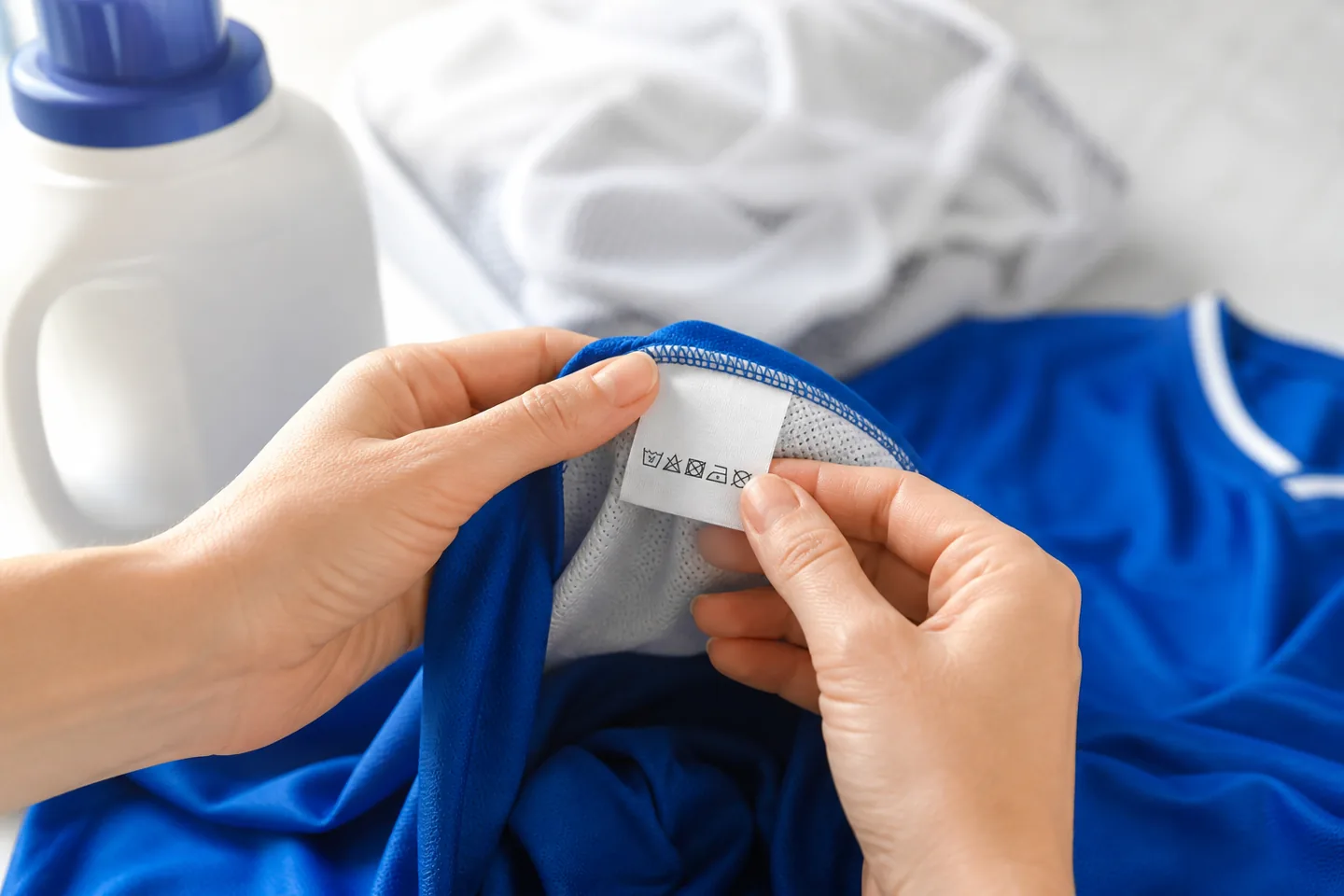
Treat a visible stain before the main wash and check it again before drying. The safest method depends on both the stain and the jersey material. Begin with the least aggressive option allowed by the label. Use clean white cloths where possible, because colored towels can transfer dye and make it harder to judge progress.
For fresh drink or food marks, blot liquid from the surface without pushing it across the shirt. For dried mud, lift away loose soil gently before adding water. Grass marks may need a mild detergent pre-treatment, but hard rubbing can roughen polyester knit or catch the edge of a heat transfer.
| Stain | First Action | Avoid |
|---|---|---|
| Mud | Remove loose soil, then pre-treat | Grinding grit into the fabric |
| Grass | Blot and use an approved mild treatment | Hard brushing near graphics |
| Sweat | Wash promptly with measured detergent | Leaving the shirt damp in a bag |
| Food or drink | Blot from the outer edge inward | Spreading the liquid by rubbing |
| Unknown stain | Check the label and test permitted care | Combining multiple chemicals |
Never mix cleaning products. If an allowed treatment does not work, repeat only when its instructions permit another application. Do not escalate automatically to bleach, hotter water, or a dryer. Valuable, vintage, signed, or fragile jerseys may be better assessed by a textile-care specialist before further treatment.
How to Store a Football Jersey After Washing
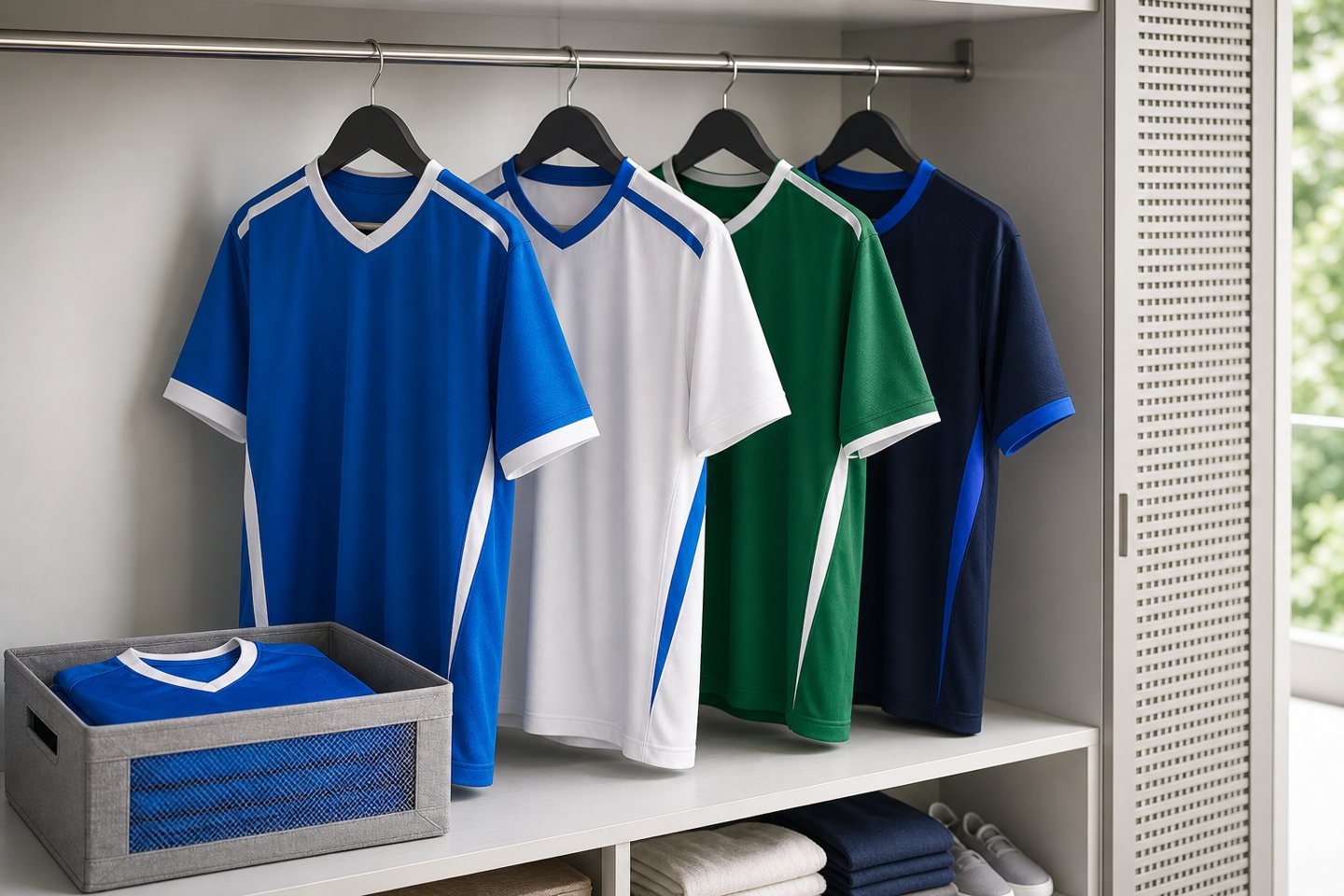
Store a football jersey only after it is completely clean and dry. Residual moisture can create odor, wrinkles, and poor storage conditions. Confirm that the collar, underarms, seams, badges, and thick patch areas are dry, because those parts may retain moisture after the main fabric feels ready.
For routine storage, use a clean smooth hanger that supports the shoulder width without creating points in the fabric. A folded method can suit heavier or collector shirts, but place acid-free tissue between decorated surfaces when specialist archival care is needed. Never press a heat-applied number against a rough zipper, hook, or another sticky transfer.
- Choose a clean, dry, ventilated wardrobe or container.
- Keep the jersey away from direct sunlight and high heat.
- Do not seal damp fabric inside a plastic bag.
- Avoid crushing badges, patches, names, and numbers.
- Keep sharp hangers and rough fasteners away from knit fabric.
- Inspect collector jerseys periodically for moisture or transfer changes.
A jersey worn again before washing should not go directly into long-term storage. Air it first and assess sweat or stains under good light. When a garment is signed, framed, or historically valuable, ordinary household storage advice may be insufficient; conservation materials and professional guidance can reduce avoidable handling risk.
Common Football Jersey Washing Mistakes
- Washing right-side out. This exposes names, numbers, and logos to more friction.
- Using hot water. Excessive heat may affect synthetic fabric, color, and applied graphics.
- Adding fabric softener. It can leave unwanted residue on performance fabrics.
- Using chlorine bleach. Bleach may damage fabric, trim, transfers, and patches.
- Washing with towels or jeans. Heavy textiles create unnecessary abrasion and can snag fine knit.
- Drying on high heat. Heat and tumbling may stress prints and synthetic fibers.
- Ironing over graphics. Direct heat can distort, gloss, crack, or lift applied designs.
- Drying before checking stains. Heat can make some stains more difficult to remove.
- Using too much detergent. Excess product can leave residue after an incomplete rinse.
- Storing while damp. Trapped moisture encourages odor, wrinkles, and poor storage conditions.